

Getting accepted into a Canadian institution is exciting, but the visa stage can feel confusing. The process becomes easier when you understand the Canada study visa requirements early and prepare your documents in the right order.
Officially, Canada issues a study permit, not a “student visa” as the main document. A study permit allows you to study at a Designated Learning Institution (DLI) in Canada.
Students may also need a Temporary Resident Visa (TRV) to enter Canada, but this is usually issued together with an approved study permit, so you do not normally apply for it separately.

To apply for a Canadian study permit from Malaysia, you must show that you are a genuine student, financially prepared and able to follow Canadian immigration conditions. In most cases, you should prepare:
Your documents should tell one consistent story about your course choice, funding source and intention to follow study permit conditions.
Find out more about preparation for how to study in Canada from Malaysia.
Contact MABECS for step-by-step support with institution shortlisting, study permit requirements and document readiness.
A major requirement many older Canada student visa guides overlook is the PAL/TAL.
This letter confirms that the province or territory where you plan to study has allocated a place for you as an international student.
Most new post-secondary students need a PAL/TAL. However, students applying for master’s or doctoral degree-granting programmes at eligible public DLIs are exempt from 1 January 2026.
For Quebec, the approved Quebec Acceptance Certification (CAQ) can serve as the required provincial attestation.
For applications made on or after 1 September 2025, a single applicant studying outside Quebec must show at least CAD 22,895 for first-year living expenses. This does not include tuition fees or transportation costs.
You may use bank statements, education loan approval, tuition or housing payment receipts, scholarship letters, a Canadian bank account, a GIC, a bank draft or sponsor documents.
The source and consistency of funds matter; large unexplained deposits can weaken the application.
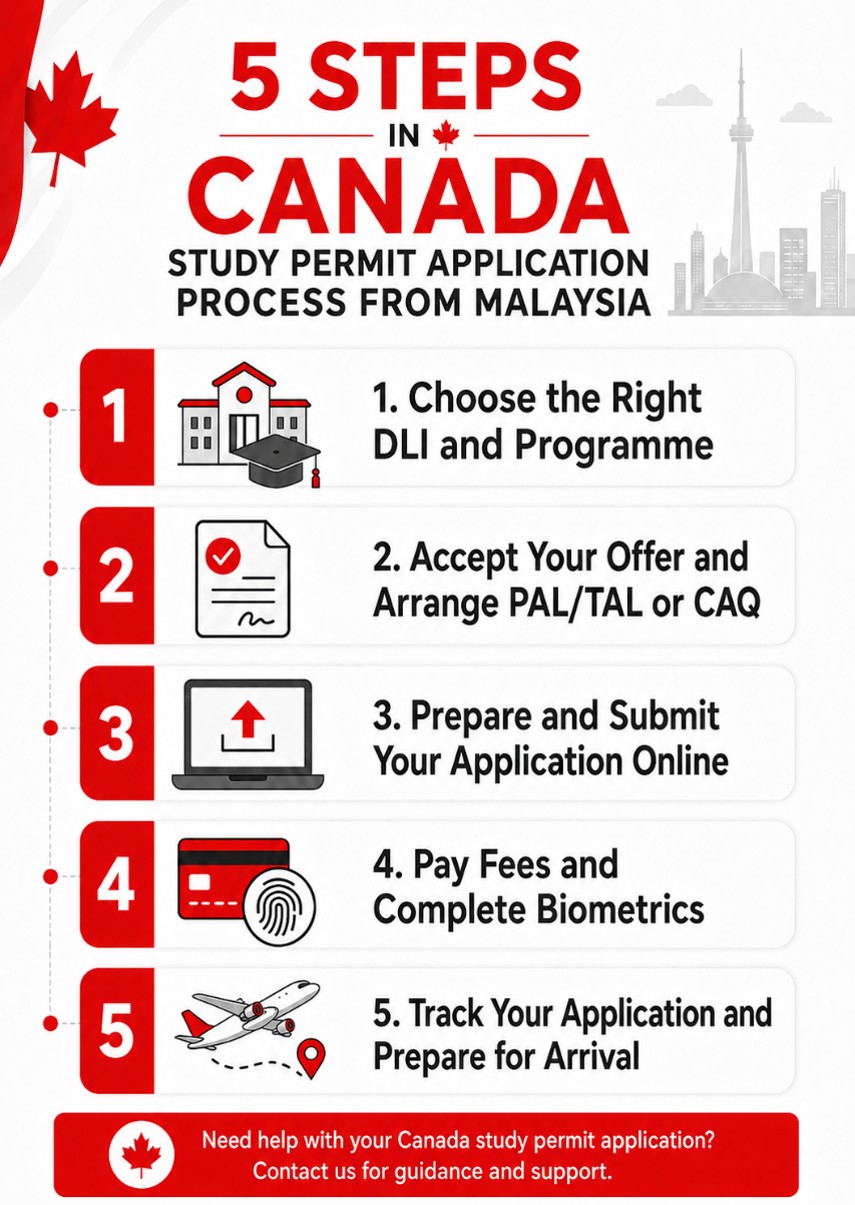
It is important to understand each step clearly so you can prepare the right documents, avoid delays and submit your application with greater confidence.
Before accepting an offer, check that the institution is a DLI and that your programme supports your study and career goals.
After accepting your offer, your institution will advise whether you need a PAL/TAL and what payment or confirmation is required. Quebec-bound students should complete the CAQ step first.
Malaysian applicants should refer to the IRCC application package for Malaysia. Make sure your passport details, offer letter, financial proof and study plan are consistent before uploading your documents.
The study permit fee is CAD 150. In most cases, applicants who need biometrics pay an additional CAD 85. After submission, wait for your Biometric Instruction Letter before booking your biometrics appointment.
IRCC may request biometrics, medical results, passport submission or extra documents. Check the official processing time tool regularly. If approved, you receive a Port of Entry Letter of Introduction; your actual study permit is issued when you arrive in Canada.
Contact MABECS to understand your Canada study visa requirements early and prepare your application documents.
Eligible international students may work off campus for up to 24 hours per week during regular academic sessions and more during scheduled breaks. You can only start after your studies begin, and part-time work should not replace proper financial proof.
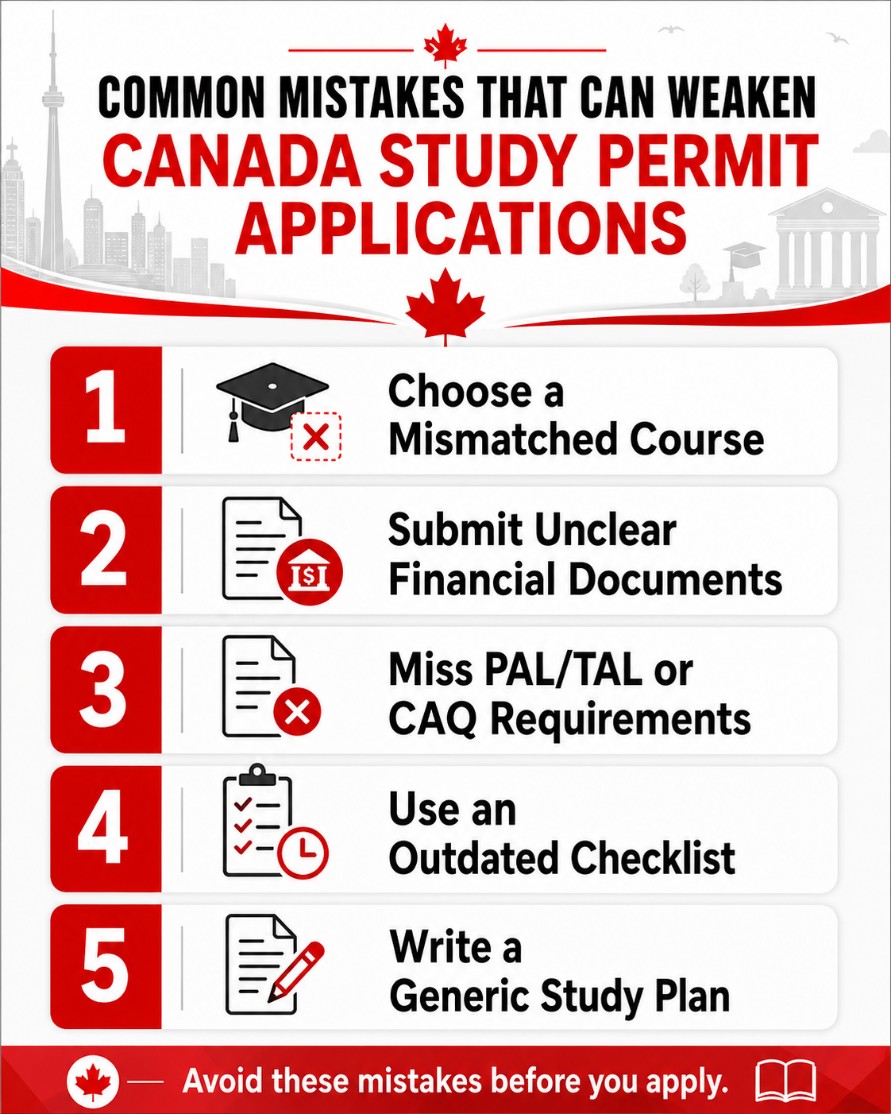
A Canada study permit application should show a clear, consistent and credible reason for studying in Canada.
A strong application connects your academic history, course choice, financial readiness and future goals. MABECS can help students understand key requirements, organise supporting documents and prepare a more complete study permit application with greater confidence.

MABECS education consultant agency gives students clearer direction, so each step is planned with both university admission and visa readiness in mind.
Since 1985, MABECS has guided students through overseas education planning with a student-first approach. Our support for study in Canada covers institution and programme shortlisting, entry requirement checks, application document preparation and early planning for study permit requirements.
We can advise on whether your chosen programme matches your academic background, whether your documents are consistent, and what to prepare for key visa steps such as PAL/TAL, CAQ where relevant, biometrics and online application submission.
With structured guidance from MABECS, students can avoid common mistakes, stay organised and move through the Canada study application process.
Studying in Canada can open the door to a rewarding international education experience, but a strong application starts with early planning, accurate documents and a clear study purpose. Understanding the Canada study visa requirements before you apply can help you avoid last-minute stress, missing documents and unnecessary delays.
Before submitting your study permit application, make sure your course choice, financial evidence, offer letter, PAL/TAL or CAQ requirements, study plan and supporting documents are aligned.
A well-prepared application should show why your chosen programme makes sense, how you are ready to fund your studies and how your education in Canada supports your future goals.
Contact MABECS today for personalised support with Canada study visa application requirements, document preparation, institution selection and study pathway planning.
No, a Canada study permit allows you to study in Canada, while a TRV or eTA is used for entry into the country.
A single applicant outside Quebec currently needs at least CAD 22,895 for living expenses, excluding tuition fees and travel costs.
Most new post-secondary students need a PAL/TAL, and MABECS can help you understand whether this applies to your chosen institution and programme.
No, you generally need a Letter of Acceptance from a recognised Canadian DLI before submitting your study permit application.
Yes, eligible students may work up to 24 hours per week off campus during regular academic sessions, depending on their study permit conditions.
MABECS guides students through pathway planning, document readiness, institution selection and key Canada study visa requirements before application submission.