

Studying overseas is an exciting goal, but scholarship planning can feel confusing when there are many requirements, deadlines, and documents to prepare.
Many students also worry that scholarships are only meant for top scorers, when in reality, some awards also consider leadership, financial need, course choice, personal goals, and how well you present your story.
Students searching for how to apply for scholarships in Malaysia should begin by understanding what each scholarship provider is looking for.
Some overseas scholarships may require an offer letter from a university, while others ask for a personal statement, academic results, references, or proof of eligibility.
This guide will help students find suitable overseas scholarships, prepare stronger applications, avoid common mistakes, and explore how MABECS education advisors support their study abroad journey.
There are several scholarship routes available for students planning to study abroad. Some scholarships are offered by universities, while others come from governments, companies, foundations, or education partners.
Each option has different requirements, award values, deadlines, and conditions.
| Scholarship Route | What It Usually Covers | Best Suited For | Key Things to Check |
|---|---|---|---|
| University scholarships | Partial tuition fee discounts, merit awards, subject-based awards, or country-specific scholarships | Students applying directly to overseas universities | Eligibility, deadline, course requirements, whether a separate application is needed |
| Government-linked scholarships | Tuition fees, living allowance, travel support, or full sponsorship | High-achieving students with strong academic and leadership profiles | Bond conditions, approved courses, approved countries, service requirements |
| Corporate scholarships | Tuition support, internship opportunities, career pathways, or bonded sponsorship | Students interested in specific industries such as finance, engineering, business, or technology | Bond period, career expectations, academic requirements, interview process |
| State foundation awards | Financial aid or scholarship support based on state eligibility | Students who meet state residency or family background criteria | State eligibility, income criteria, required documents, repayment terms |
| External funding bodies | Grants, bursaries, education funds, or partial sponsorship | Students who need additional financial support alongside university awards | Application timeline, award value, documents needed, renewal conditions |
Choosing the right scholarship is about finding one that matches your academic profile, course choice, study destination, financial needs, and long-term plans.
Speak to MABECS to explore suitable overseas universities, understand available scholarship opportunities, and prepare your application before the next intake.

Before applying for any scholarship, be clear about what you want to study, where you want to study, and how the course supports your future plans. Scholarship panels usually want to see that you have researched your study pathway properly, not simply chosen a popular country or university.
Compare the course structure, entry requirements, tuition fees, location, career outcomes, and scholarship eligibility across different overseas destinations. Some students may prioritise academic reputation, while others may consider affordability, post-study opportunities, campus environment, or available funding support.
MABECS helps students explore suitable overseas study options based on their academic results, interests, budget, and long-term goals. This ensures students avoid applying blindly and focus on courses that are better aligned with their scholarship eligibility and future plans.
If you are interested studying abroad in the UK, find out more about Malaysia scholarship to study in the UK.

Once your course direction is clearer, start building a scholarship shortlist. Avoid applying randomly to every scholarship you see. Instead, check whether you meet the nationality, academic, course, level of study, intake, deadline, and destination requirements.
Some overseas scholarships are linked to specific universities, while others may be offered by governments, companies, foundations, or external funding bodies.
Certain awards may apply only to undergraduate students, postgraduate students, selected subject areas, or applicants who already hold an offer from a university.
A useful shortlist should include the scholarship name, university or provider, award value, eligible course, deadline, documents needed, selection criteria, and whether an admission offer is required first. This simple tracking habit helps prevent missed deadlines and rushed applications.

Most scholarship applications may need academic transcripts, exam results, certificates, passport or IC details, university offer letter, proof of English proficiency, reference letters, a personal statement, essay, CV, portfolio, or evidence of extracurricular achievements.
Your documents should tell one clear story: who you are, what you have achieved, why you chose your course, why you deserve support, and how you plan to contribute after graduation.
Avoid sending generic essays (which we will explain further in Step 6) that could apply to any university, country, or scholarship. Panels are more likely to remember applications that feel specific, sincere, and supported by evidence.
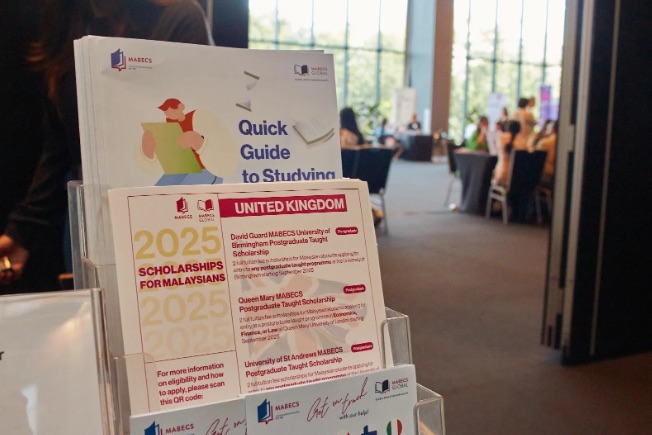
Many overseas scholarships, especially university-linked awards, require students to apply for admission before applying for the scholarship. This is because the institution may need to confirm your offer status, course eligibility, fee status, and academic conditions.
Application processes can differ by country, university, and level of study. Some undergraduate applications may go through centralised systems, while others are submitted directly to the university.
Postgraduate applications are also commonly handled through university portals. After receiving an offer, students may then proceed with the scholarship application when an offer is required.
See the differences between A Levels vs Foundation or you can check out the foundation courses in the UK for international students.
A strong scholarship essay should not simply repeat your grades. It should show the person behind the results. Explain the challenge you want to solve, the field you hope to contribute to, and how studying overseas can help you grow academically and professionally.
Students can also strengthen their application by connecting their study plans to real needs in Malaysia or their future industry.
For example, a student applying for engineering, data science, education, law, business, or healthcare can explain how an overseas degree may help them bring back stronger knowledge, skills, or perspective.
Before submitting, check that your essay answers the exact question, stays within the word count, avoids copying online templates, and uses specific examples instead of general statements such as “I am passionate” or “I want to help people.”
Learn more about how to write for your scholarship application to ensure you secure your opportunity to get your scholarship.

Some scholarships include interviews, written assessments, nomination reviews, or additional screening.
Shortlisted students may need to discuss their course choice, leadership experience, financial need, career goals, and why the scholarship provider should invest in them.
Practise answering clearly without memorising every sentence. Interviewers usually look for authenticity, maturity, and self-awareness.
Be ready to explain both your achievements and your learning journey, including what you hope to do with the opportunity after graduation.
Start your scholarship journey with MABECS and get personalised guidance on overseas study options, available scholarships, university applications, and important deadlines.
Many capable students miss out on scholarship opportunities because of small but avoidable mistakes. Before submitting your application, watch out for these common issues:
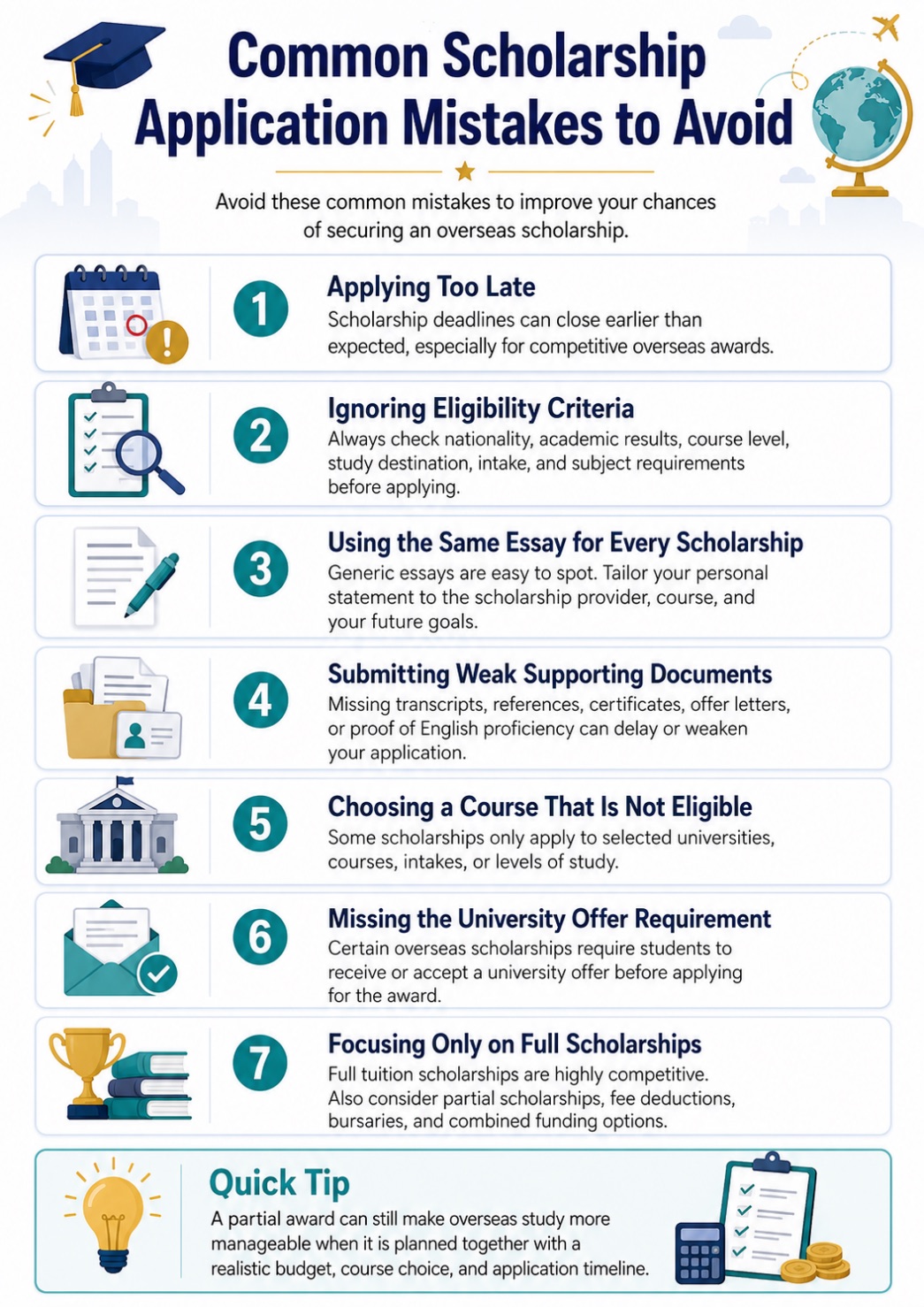
A partial award can still make overseas study more manageable when it is planned together with a realistic budget, course choice, and application timeline.

Applying for scholarships can feel confusing because every award has different rules, deadlines and documents. MABECS helps students make the process clearer by matching scholarship options with their course, destination, budget and study goals.
Instead of applying randomly, students can get guidance on:
Through its resources for scholarship application, MABECS helps students explore scholarship opportunities for Malaysians, including selected university awards, exclusive MABECS opportunities and co-funded scholarships with partner institutions.
With experience supporting students since 1985, MABECS helps students connect scholarship opportunities with a realistic study plan, including course selection, university application, scholarship preparation, and visa guidance.
A strong scholarship application begins with careful planning. You need the right course choice, a suitable university shortlist, well-prepared documents, and a clear understanding of what each scholarship provider expects.
Starting early gives you enough time to review your options, strengthen your personal statement, prepare supporting documents, and meet important deadlines with less stress.
It also helps you avoid applying for scholarships that do not match your course, intake, study level, or eligibility.
MABECS can guide you through this process with personalised support for overseas study planning and scholarship opportunities.
Speak to our education advisors to explore suitable universities, understand available scholarships, and prepare your application with greater confidence before the next intake.
Students should choose a suitable course, check scholarship eligibility, prepare documents early, and apply before the deadline with guidance from an experienced education advisor.
Yes, students can explore university scholarships, partial fee awards, bursaries, government-linked funding, corporate scholarships, and selected MABECS-linked opportunities for overseas study.
Some scholarships require a university offer first, and MABECS helps students understand which awards need admission approval before the scholarship application.
Yes, MABECS supports students with course matching, scholarship shortlisting, document preparation, university applications, offer guidance, and visa preparation for overseas study.